Technical Cultivar Directory

Winter Planters: Living Architectures for Sub-Zero Seasons

Most potted holiday displays collapse by New Year's Day because creators treat winter planters as floral vases rather than living root environments. When cold air drops below -15°C, moisture in standard potting peat expands, tearing delicate root crowns, while drying winter winds siphon sap faster than frozen roots can draw moisture.

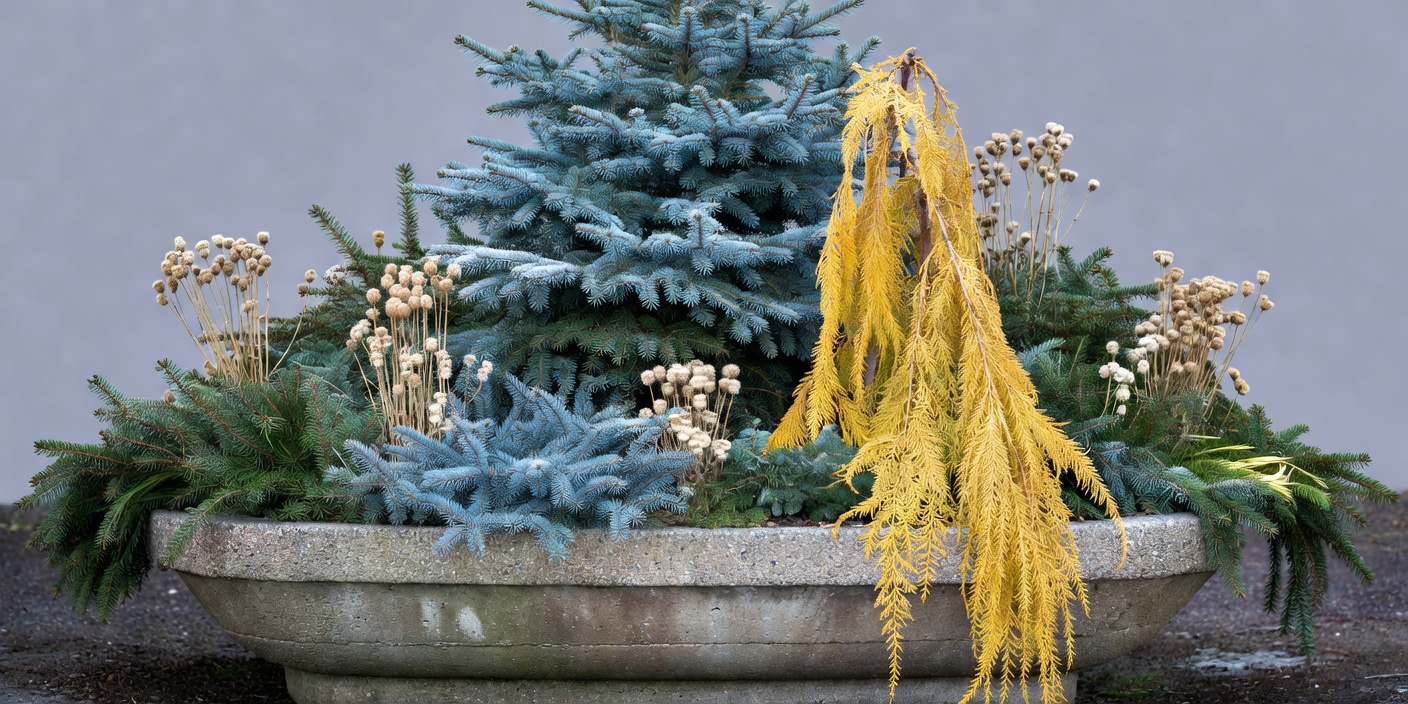
Thick cast concrete planter planted with blue spruce, golden weeping cypress, and dried seed heads

1. Soil Composition for Freeze Resistance

Standard indoor potting mix holds too much water and freezes into an impenetrable ice block that suffocates plant roots. Our Nordic outdoor potting formulation relies on superior drainage:

  • ▪ 40% Coarse Horticultural Grit & Perlite: Maintains air pockets even when saturated.
  • ▪ 35% Aged Pine Bark Fines: Provides organic micro-nutrients while remaining naturally acidic.
  • ▪ 25% Heavy Loam: Supplies root ballast and prevents light pots from overturning in gales.

2. Pot Thermodynamics & Wall Physics

Never use thin single-wall plastic or unglazed terracotta outdoors in freezing weather. Water absorbed by terracotta pores freezes, expands by 9%, and cleanly splits the vessel. Opt for:

  • ▪ Fiberstone (Resin & Stone Dust): High thermal resistance with flexibility against frost heave.
  • ▪ Rot-Resistant Heartwood Cedar: Natural insulation value (R-value ~1.2) cushioning the root zone.
  • ▪ Double-Glazed Vitrified Stoneware: Fired at 1200°C so water absorption is under 0.5%.

Cultivar Matrix: Cold Tolerance & Growth Profiles

Use living, cold-tolerant woody perennials suited for northern hardiness zones (USDA Zones 2 through 5). Below is our tested nursery reference table:

Botanical Name Common Name Min. Temperature Winter Foliage Tint Best Arrangement Role
Picea pungens 'Glauca Globosa' Dwarf Blue Globe Spruce -45°C Vibrant icy silvery-blue Central compact focal thriller
Taxus cuspidata 'Nana' Dwarf Japanese Yew -35°C Deep obsidian green Lush backdrop filler
Chamaecyparis pisifera 'Filifera Aurea' Golden Mop Threadleaf Cypress -32°C Bright chartreuse gold Perimeter contrast spilling foliage
Cornus alba 'Sibirica' Siberian Red Dogwood -40°C Coral to crimson bark Vertical sculptural twigs inserted at base
Gaultheria procumbens Wintergreen Checkerberry -35°C Bronze-tinted leathery greens with red berries Base carpet soil cover

Step-by-Step Planting Protocol

  1. Ensure drainage: Check that bottom drainage ports are clear. Cover hole with a curved terracotta shard or mesh to avoid soil clogging.
  2. Insulate inner pot perimeter: Line container walls with 15mm extruded polystyrene or closed-cell bubble insulation before filling with soil.
  3. Firm the root ball: Place the central dwarf conifer at the same root depth as its nursery pot. Press soil firmly to eliminate dry air pockets.
  4. Insert cut branches for volume: Push fresh boughs of grand fir, noble fir, and cedar 10cm deep into the moist perimeter soil; the cold weather preserves them naturally for 12 weeks.
  5. Finish with bark mulch: Top the container with 5cm of weathered Douglas fir bark mulch to keep frost from penetrating the topsoil.
Proceed to Porch Styling Ideas