Festive Ecology

Bird Sanctuaries: Edible Winter Garden Adornments

In the Nordic seasonal philosophy, garden decorating and wildlife stewardship are inseparable. When frost blankets the northern landscape, native birds—such as Eurasian bullfinches, crested tits, and waxwings—must consume up to a third of their body weight daily in calorie-dense seeds and suet to survive freezing nights. Transform outdoor holiday arrangements into life-saving feeding stations.

The Traditional Scandinavian Julkärve

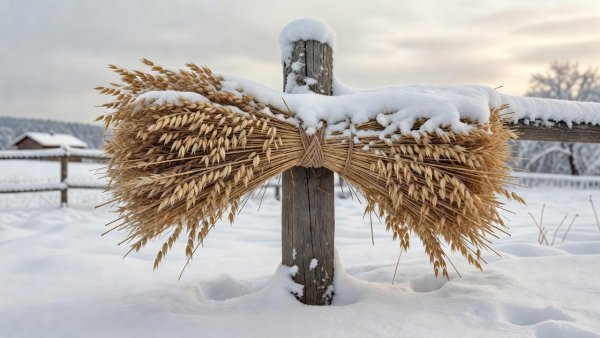
For centuries across Sweden, Norway, and Finland, rural households have mounted a thick bundle of unthreshed oat stalks (julkärve) upon a wooden garden post on Christmas Eve.

This historic custom provides winter foraging for yellowhammers and tree sparrows while establishing a warm golden architectural accent against clean white snowfields. Position the oat sheaf within 3 meters of evergreen shrubs to provide birds with instant escape routes from predatory sparrowhawks.

Traditional Scandinavian oat sheaf tied with a natural cord mounted on a wooden fence post covered in winter snow

Suet Pine Cone Bells

Gather large pine cones (Pinus nigra). Roll them in a warmed blend of beef tallow or pure coconut fat combined with black oil sunflower seeds, chopped hazelnuts, and dried elderberries. Hang them from low conifer boughs using natural jute string.

Edible Hanging Wreaths

Bind bundles of fresh wheat, millet stems, dried apple slices, and whole rosehips onto a flexible hazel hoop. As birds feed throughout January, the wreath evolves organically, celebrating natural life cycles.

Winter Water Provisions

Birds need fresh liquid water for drinking and feather conditioning during sub-zero cold. Install a stone water saucer equipped with a low-wattage submerged ceramic heater to prevent freezing without overheating the bath.

Calorie & Nutrition Guide for Winter Visitors

Winter Bird Species Preferred Winter Forage Ideal Architectural Feeder Position
Eurasian Bullfinch (Pyrrhula pyrrhula) Ash seeds, dried berries, sunflower hearts Low hanging branches near dense yew hedges
Bohemian Waxwing (Bombycilla garrulus) Rowan berries (Sorbus), cotoneaster, crabapples High elevated platforms and open tree crowns
Great Tit & Blue Tit (Paridae) High-fat beef tallow cakes, crushed peanuts Suspended swaying feeders resistant to squirrels
Yellowhammer (Emberiza citrinella) Unprocessed whole oat grains, cracked wheat Ground-level feeding trays or high oat sheaves

Evergreen Shelter Corridors

Decorations should never disturb existing wildlife roosts. When winding warm fairy lights around porch pillars or arbor arches, inspect the inner shrub branches for sleeping birds or hibernating ladybugs. Use soft, indirect illumination and set automated timers to turn lighting off by 10:00 PM, maintaining natural circadian rhythms for nocturnal garden visitors.